Recovery Technologies Like NormaTec and PureFlow: Are They Worth It?
Compression boots and passive cardio systems promise faster recovery and better circulation. We break down the science to help you decide what belongs in your routine.
OMICS Clinical Team · Medical review: Pending medical review
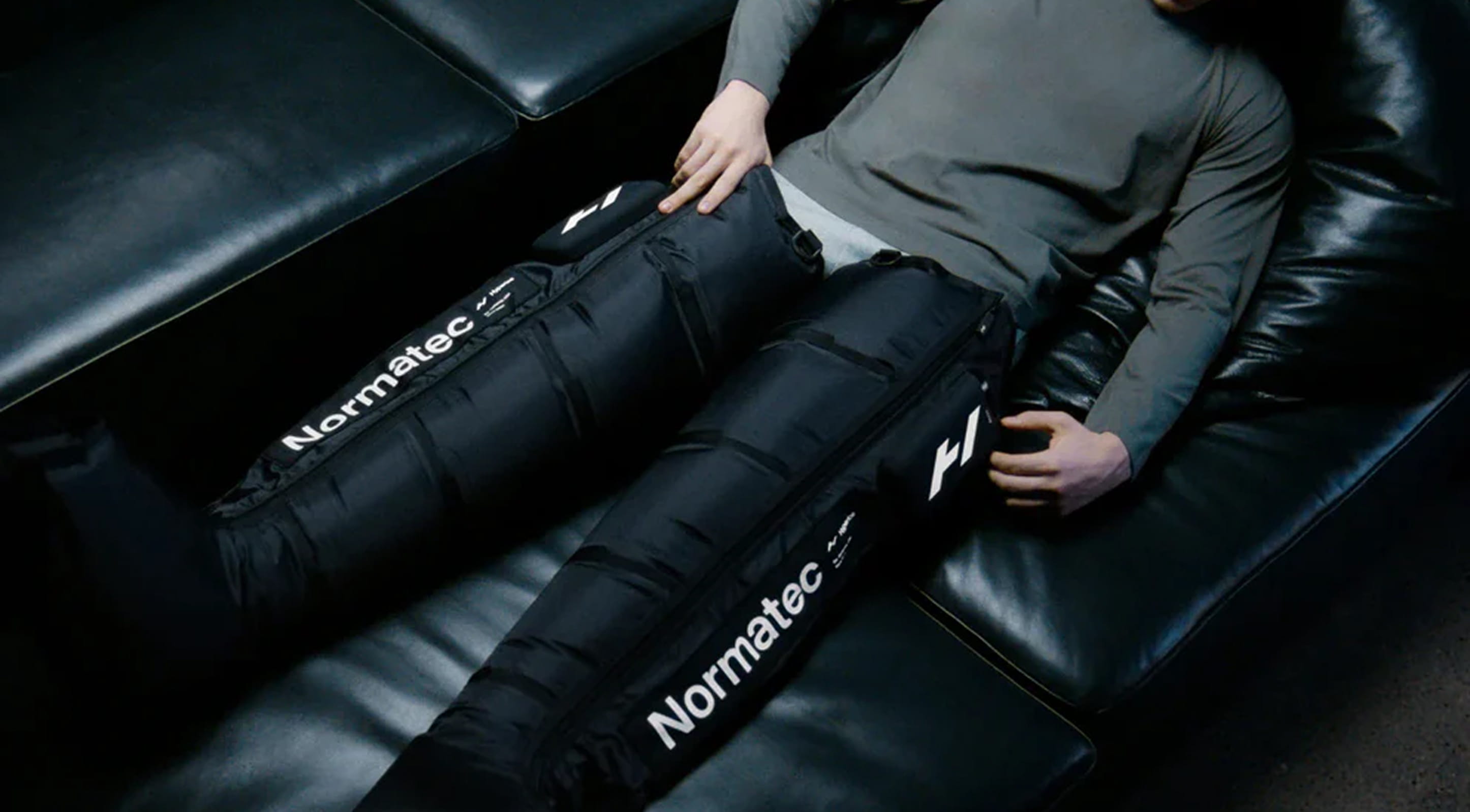
Recovery technology has become one of the most visible categories in proactive health. Pneumatic compression boots, percussive massage devices, infrared platforms, contrast therapy and ECG-timed pulse compression systems are now common features of high-end gyms, longevity clinics and home wellness setups in Dubai and globally. NormaTec is a widely recognised name in compression recovery, and PureFlow has gained attention as a counter-pulsation system originally rooted in cardiology. The marketing around all of these tools is confident. The evidence is more measured. This guide examines what the technologies actually do, what the science currently supports and how to think clearly about whether any of them are worth the money and time.
Why Recovery Technology Has Become a Trend
The cultural appetite for recovery technology has grown alongside two broader shifts. The first is the move toward proactive health, in which adults increasingly view their bodies as systems to be measured, tracked and optimised rather than treated only when something breaks down. The second is the spread of professional sports recovery practices into the consumer market.
Pneumatic compression boots once belonged in physiotherapy departments and elite training facilities. Today they sit beside bedside tables. Percussive massage guns, originally niche tools used by physical therapists, are now sold in mainstream retail. Infrared saunas, contrast plunges and red light panels have followed similar paths. The longevity-focused population in Dubai, like that in other major cities, has been a meaningful driver of this trend.
Demand has been amplified by the wellness media ecosystem and a steady stream of athlete endorsements. Both can create the impression that any technology used by elite performers is automatically valuable for the rest of the population. That impression is not always accurate. Tools that produce small, marginal benefits in athletes who are training near their physiological ceiling may produce different, sometimes negligible, effects in adults whose limiting factors are sleep quality, training consistency or recovery time generally.
This is the context in which the question, are these technologies worth it, deserves a careful answer rather than a marketing one.
What Is NormaTec?
NormaTec is a brand of sequential pneumatic compression therapy originally developed in clinical settings and later adapted for athletic recovery. The system uses inflatable garments, typically boots covering the legs, that fill in a sequence of overlapping zones. The compression is applied from the feet upward in a pattern intended to support venous and lymphatic return.
A typical NormaTec session lasts between 20 and 60 minutes. The user lies or sits with the garments inflated around the limbs, and the device cycles through programmed pressure patterns. The experience is generally pleasant rather than painful, and most adults can use the system without specific training.
The brand is now part of Hyperice, and the technology is widely available in athletic recovery facilities, performance clinics and increasingly in private homes. Variants include systems for the legs, hips, lower back and arms.
What Is PureFlow?
PureFlow is a different category of pneumatic compression technology. It uses sequential compression cuffs on the calves, thighs and buttocks, but the timing of the compression is synchronised with the user's heartbeat using an ECG signal. This is known as counter-pulsation: pressure is applied during the diastolic phase of the cardiac cycle, when the heart is filling, with the aim of supporting circulation and venous return in a more cardiovascular-style pattern than standard compression.
The principle behind PureFlow has its origins in External Counter-Pulsation, or ECP, a clinical technique that has been used for several decades in cardiology, primarily for patients with refractory angina. The consumer recovery version applies a related mechanism in a less intensive form, marketed as a passive cardiovascular session that supports recovery and circulatory health.
Sessions typically last around 45 minutes, and the technology is used in recovery centres and clinics. The experience is similar in feel to other compression systems, with the additional sense of pressure timed to the cardiac rhythm.
NormaTec and PureFlow are sometimes grouped together because both use pneumatic compression, but they are mechanistically distinct. NormaTec applies a programmed sequential pattern. PureFlow applies a heart-rhythm-synchronised pattern derived from a clinical counter-pulsation tradition.
The Science: How Pneumatic Compression Works
The physiological rationale for pneumatic compression is reasonably well established at a mechanistic level, even if the case for performance enhancement is more nuanced.
Compression of the limbs supports venous return by mechanically encouraging blood from the peripheral circulation back toward the heart. It also supports lymphatic drainage by promoting movement of interstitial fluid. Sequential compression, in particular, is designed to mimic the natural action of the muscle pump that operates during physical activity but is reduced during rest.
In clinical settings, intermittent pneumatic compression has been used for decades to reduce the risk of deep vein thrombosis in immobile patients, manage venous insufficiency and support lymphoedema management. The clinical evidence in those contexts is robust.
The application to athletic and general recovery is more recent, and the evidence base is more mixed. Studies have examined effects on delayed-onset muscle soreness (DOMS), perceived recovery, range of motion, lactate clearance and subsequent performance. The results vary by methodology, population and outcome measure, and the evidence is not uniformly positive.
The most consistent finding is a modest reduction in perceived muscle soreness following exercise. The effect is real but generally small. Reductions in objective markers of muscle damage are less consistent. Effects on subsequent performance are inconsistent and often not statistically significant.
For ECG-timed counter-pulsation specifically, the clinical heritage in angina is well established, but the evidence base for the consumer recovery application is smaller and less developed. Some markers of vascular function and perceived energy have been investigated, although larger and longer studies are still needed to draw firm conclusions about routine use in healthy adults.
The honest summary is that pneumatic compression has a defensible mechanistic rationale and a meaningful but modest evidence base for some recovery-related outcomes, with weaker evidence for performance gains.
What the Evidence Actually Supports
Reviewing the published research with a fair eye, several conclusions are reasonable.
Perceived recovery is improved. A consistent finding across studies is that adults using compression therapy report feeling less sore and more recovered. This is a genuine effect and not trivial. Subjective wellbeing matters, both for adherence to training and for general quality of life.
Markers of muscle damage are modestly affected at best. Creatine kinase, myoglobin and other biomarkers of muscle damage do not consistently fall in response to pneumatic compression, though some studies show small effects. The expectation that these tools meaningfully accelerate biochemical recovery is not well supported.
Performance outcomes are mixed. Studies examining whether compression therapy improves subsequent training session performance, repeat sprint capacity or strength outputs have produced inconsistent results. There is no strong basis for expecting consistent performance improvements from compression alone.
Circulatory effects are real but context-dependent. Pneumatic compression measurably increases blood flow during the session itself. Whether this translates into clinically meaningful changes in vascular health over time, in healthy adults using the technology recreationally, is not yet well established.
Safety is generally good. Adverse events from pneumatic compression in healthy adults are uncommon. Specific contraindications exist for individuals with deep vein thrombosis, severe peripheral vascular disease, certain skin conditions and other clinical scenarios. Use should be considered with appropriate medical input where any clinical concern exists.
How NormaTec and PureFlow Compare
For adults considering whether one or the other is more appropriate, several distinctions are worth noting.
Mechanism. NormaTec applies a programmed sequential compression pattern. PureFlow applies an ECG-synchronised counter-pulsation pattern. The two systems are not interchangeable in their physiological intent.
Heritage. NormaTec emerged from clinical compression therapy and has been adapted progressively toward athletic recovery. PureFlow is rooted in counter-pulsation cardiology, and its consumer recovery version applies a related but less intensive form of that technique.
Evidence base for recovery use. NormaTec and similar pneumatic compression systems have a more developed recovery research base, particularly for perceived soreness and limb circulation. The evidence base for PureFlow's consumer recovery application is smaller, although the underlying counter-pulsation literature in cardiology is well established for its clinical indications.
Use case. NormaTec is generally used as a post-training or post-event recovery tool. PureFlow is positioned more broadly, with a focus on circulatory health and recovery in adults whose primary concern may not be athletic.
Practicality. NormaTec is widely available in athletic recovery facilities and is increasingly used in home settings. PureFlow is more typically delivered through dedicated clinics and recovery centres, with sessions lasting around 45 minutes.
The choice between them is less about which is superior and more about which physiological intent and use context fits the individual.
Other Recovery Technologies in the Same Conversation
Pneumatic compression is one category among several. A complete view of recovery technology includes a number of other tools.
Percussive massage devices apply rapid mechanical impact to muscle tissue. The evidence for short-term improvements in range of motion and perceived recovery is reasonable; the evidence for performance outcomes is more limited. They are convenient and inexpensive but should not be over-interpreted as therapeutic for serious soft tissue conditions.
Cold therapy includes ice baths, cold plunges and cryotherapy chambers. The evidence for reducing perceived soreness and inflammation in the short term is reasonable. There is also evidence that aggressive cold therapy applied immediately after resistance training may blunt some hypertrophic adaptations, suggesting timing matters for individuals whose primary goal is muscle gain.
Heat therapy includes saunas, infrared saunas and hot tubs. The cardiovascular and thermoregulatory adaptations to regular sauna use have been studied, with reasonable observational evidence linking habitual use to cardiovascular and longevity outcomes. The infrared variant has a smaller evidence base than traditional Finnish-style saunas.
Contrast therapy alternates hot and cold exposure. Anecdotal popularity exceeds the strength of the evidence, but it remains a reasonable option for adults who tolerate the experience well and find it useful.
Red and near-infrared light therapy (photobiomodulation) has a growing but still developing evidence base for muscle recovery, skin and certain musculoskeletal applications. The optimal protocols, devices and outcomes are not yet fully resolved.
Compression garments worn during exercise are a separate category from pneumatic compression. The evidence for performance enhancement is limited; the evidence for improved perceived recovery when worn after exercise is more favourable.
Understanding these categories together helps put NormaTec and PureFlow in proper context. They are useful tools within a wider recovery toolkit, not standalone solutions.
Who Is Most Likely to Benefit?
Recovery technology produces the largest practical benefit for individuals whose foundations are already in place. If sleep, nutrition, training load, stress management and overall recovery time are well managed, an additional layer of recovery technology can provide meaningful incremental benefit. If the foundations are not in place, these tools cannot compensate.
High-volume athletes and active adults training at intensities and frequencies that create real recovery demand are the population in which compression therapy has the most defensible role. The marginal effect on perceived recovery and circulation can support consistency, which is itself a major determinant of long-term outcomes.
Adults with circulatory concerns under appropriate clinical guidance may find counter-pulsation or sequential compression useful as part of a broader strategy. This is not a substitute for clinical evaluation of any underlying condition.
Adults with chronically poor recovery quality sometimes benefit, although the more important intervention is usually identifying why recovery is poor in the first place. Sleep disruption, hormonal imbalance, chronic stress, suboptimal training distribution and undiagnosed clinical conditions all explain poor recovery more often than the absence of a recovery device.
Adults with sedentary lifestyles, mild peripheral oedema or general circulatory complaints may find regular use of pneumatic compression supportive, although the evidence base for routine use in this population is less developed than for clinical indications.
The population for whom recovery technology is least useful are adults whose limiting factors lie elsewhere. If the bottleneck is consistent training, adequate sleep or nutritional adequacy, addressing those will produce far larger effects than any device.
The Dubai Context
Dubai has a mature market for recovery technology. Specialist recovery studios offering pneumatic compression, infrared saunas, contrast therapy and percussive massage are now common across the city, and many high-end gyms and private medical clinics include some form of recovery technology. The infrastructure for both NormaTec-style sequential compression and PureFlow-style counter-pulsation is locally available.
The local climate is relevant. Dubai's heat and humidity place additional thermal stress on residents, which can amplify perceived recovery demand. Active adults training outdoors, particularly during the warmer months, often report higher recovery requirements than they would experience in milder climates. In this context, recovery technology has a plausible practical role, although the same caveats about foundations apply.
What distinguishes a credible recovery setup from a marketing-driven one is integration. A serious approach considers recovery technology within the wider context of training load, biomarker status, sleep quality and clinical risk profile rather than as a standalone product. The shift toward a measured, evidence-led approach, in line with how healthspan medicine is developing in Dubai, helps frame the use of these technologies appropriately.
How to Decide Whether It Is Worth It
Several practical questions help determine whether investing in recovery technology is reasonable.
Are the foundations in place? Sleep duration and quality, nutritional adequacy, training consistency and stress management each produce far larger effects on recovery than any device. If any of these is consistently neglected, addressing it should come first.
What is the realistic expectation? The honest expectation from compression therapy is a modest improvement in perceived recovery, with smaller and less consistent effects on objective markers. If the expected outcome is dramatic performance gains or rapid resolution of significant soft tissue injury, the expectation is misaligned with the evidence.
Is the use sustainable? A recovery tool used twice and abandoned produces no benefit. The relevant question is whether the technology will be used regularly enough, over a long enough period, to deliver its modest effects. Adherence is often the limiting factor.
Is the cost proportionate? A device used twice a week for years has a different cost-per-session profile from the same device used briefly. For some adults, paying per session at a recovery studio is a more sensible economic model than purchasing equipment outright.
Are there clinical considerations? Adults with deep vein thrombosis history, peripheral vascular disease, certain skin conditions or other clinical concerns should seek medical input before using compression therapy.
A thoughtful answer to these questions is more useful than any product comparison.
Frequently Asked Questions
Are NormaTec boots actually effective?
NormaTec and similar sequential pneumatic compression systems have a reasonable evidence base for reducing perceived muscle soreness following exercise. Effects on objective markers of muscle damage and on subsequent performance are smaller and less consistent. The technology is most useful for active adults whose recovery foundations are already in place and who want a modest additional layer of support.
How often should you use compression recovery boots?
Most users benefit from use after demanding training sessions or on dedicated recovery days. Daily use is generally well tolerated for healthy adults but is not necessary. The optimal frequency depends on training load, individual response and time availability rather than a single recommended schedule.
Is PureFlow the same as NormaTec?
No. Both use pneumatic compression, but the mechanism differs. NormaTec applies a programmed sequential compression pattern designed for limb recovery. PureFlow applies an ECG-synchronised counter-pulsation pattern derived from a cardiology technique called External Counter-Pulsation. The two systems have related but distinct physiological intents.
Can recovery technology replace rest?
No. Recovery technology can support recovery, but it does not substitute for sleep, nutrition or genuine rest from training. The largest determinants of recovery quality are foundational rather than technological. Tools should be considered additive, not corrective.
Are there risks to using compression therapy?
For most healthy adults, pneumatic compression is generally well tolerated. Specific contraindications include a history of deep vein thrombosis, severe peripheral vascular disease, certain skin conditions, fractures and other clinical scenarios. Adults with relevant medical history should seek clinical input before using compression therapy.
Do recovery technologies improve athletic performance?
The effect on subsequent performance is inconsistent in the published evidence. Recovery technology may indirectly support performance by improving training consistency through better perceived recovery, but it should not be expected to produce direct performance gains. Performance outcomes depend more on training, nutrition, sleep and overall management than on recovery devices.
Is recovery technology worth the cost?
The answer depends on how the technology is used. For an active adult with strong foundations, regular use of compression therapy can produce modest but real benefits in perceived recovery and adherence to training. For someone whose limiting factors are sleep, training quality or nutrition, the same equipment will produce far smaller returns. The cost is most justifiable when the user has already addressed the higher-yield basics.
A Measured View of Recovery Technology
NormaTec, PureFlow and the broader category of recovery technology occupy a real but bounded place in proactive health. The mechanistic rationale is reasonable, the evidence supports modest improvements in perceived recovery, and the safety profile in healthy adults is generally good. None of this amounts to a transformative effect, and the marketing around these tools sometimes overstates what the science actually demonstrates.
For active adults in Dubai with the foundations in place, regular use of compression therapy can be a useful incremental layer in a wider recovery strategy. For those whose recovery is genuinely compromised, the more important questions are usually upstream: sleep quality, training distribution, hormonal and metabolic status and overall clinical context. Recovery technology is at its most valuable when it is treated as an addition to a coherent health strategy rather than as a replacement for one. The practical answer to the question of whether it is worth it depends, in the end, less on the device and more on the context in which it is used.